CRM decision guide
GoHighLevel or a custom CRM: which fits your business?
Start with the work your team needs to complete. Here is how I evaluate an existing platform, custom development, and an integration between the two.
My starting recommendation
Evaluate GoHighLevel first when your main need is organizing leads and customer follow-up. Consider custom development when important workflows still do not fit after reviewing the platform’s configuration and integration options.
I bring 5+ years of GoHighLevel experience alongside full-stack development and project management. This is my scoping judgment, based on the requirements I encounter. The decision should reflect your users, data, workflow, and ability to maintain the solution.
| Approach | When I would evaluate it | What to plan for |
|---|---|---|
| GoHighLevel | Your workflow fits its records, pipelines, and automation. | Configuration, data cleanup, training, and platform limits. |
| Custom CRM | You need specific screens, data relationships, or approval rules. | Development, hosting, testing, maintenance, and ownership. |
| Hybrid | The CRM fits customer follow-up; another tool handles specialized work. | Data mapping, access, sync behavior, and recovery. |
When GoHighLevel can be enough
HighLevel documents contacts linked to opportunities, customizable pipeline stages, and workflow actions that create or update opportunities after events such as a form submission. See HighLevel’s pipeline and opportunity guide.
You can store business-specific details using contact or opportunity custom fields. HighLevel also supports custom objects with fields, associations, and automation. Check the relevant feature support before assuming a specialized record requires new software. Custom fields documentation; custom objects documentation.
My EZLeeds Automation case study shows configured consumer intake, call-outcome branches, partner onboarding, and booking handoffs in GoHighLevel. It illustrates substantial workflow configuration. Its recorded enrollment counts are activity snapshots, rather than a measure of unique leads or conversion gains.
When a custom CRM is justified
I consider a custom build when the requirements need a distinct working interface, detailed permissions, or approval steps that remain awkward in the available platform. A requirement-by-requirement review should establish that need.
My Portfolio Admin CRM connects enquiries, contacts, conversations, proposals, invoices, and appointments. Its email workspace lets an operator review, edit, approve, or reject an AI draft. Those linked actions are an example of the workflow I can shape with custom development.
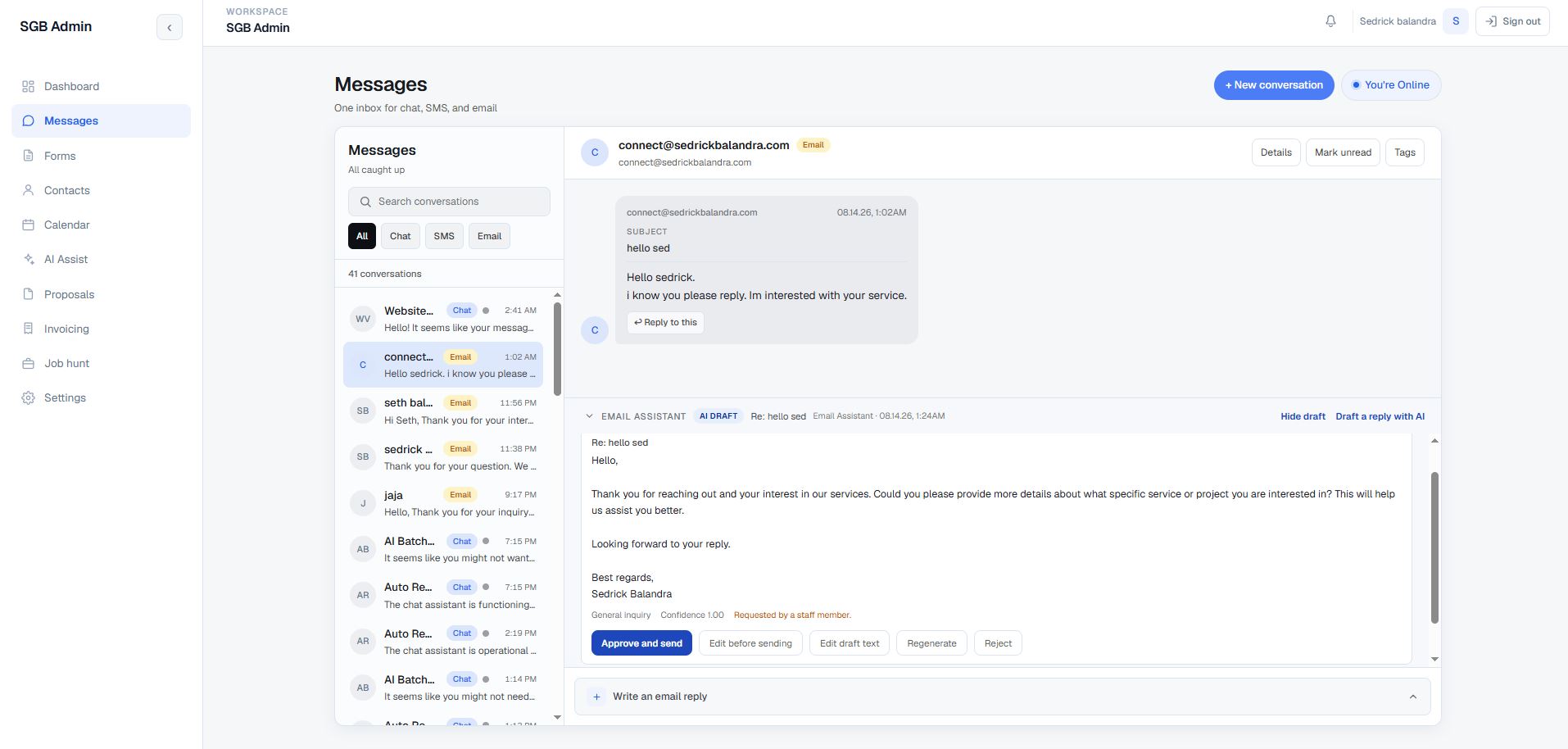
The CRM remains in progress. Telnyx SMS/calling and Stripe payments are marked not configured in the current case study. A broad feature list does not mean every connected service is available.
For any custom CRM, plan who owns hosting, backups, fixes, and future changes. I use AI-assisted development for prototyping and repetitive coding while retaining responsibility for architecture, review, testing, and delivery.
When connecting systems makes more sense
A hybrid approach can keep customer follow-up in GoHighLevel while a custom application handles specialized operations. HighLevel documents private integration tokens and OAuth authorization for different API use cases; the access method must fit the connection. HighLevel API authorization guidance.
Kane Sync Hub illustrates this architectural judgment with different platforms: JobTread retains project records, QuickBooks Online retains accounting data, and a custom workspace combines them with visible sync states. It is an integration example, rather than a GoHighLevel implementation.
I would define which system owns each field, what may update it, and how failed or stale updates become visible before building the connection.
Questions to answer before choosing
- What should happen from the first enquiry through delivery?
- Which records and tools do you already depend on?
- Who needs access, and who approves sensitive actions?
- Which requirements are essential for the first version?
- Who will maintain the setup, integrations, and custom code?
Bring sample records and one complete workflow to the discussion. We can compare the options against that concrete example and identify what needs configuration, development, or further checking.
Product capability statements link to official HighLevel documentation checked on October 13, 2026. Recommendations reflect my judgment; account access, feature support, and third-party requirements need checking for each project.
Let’s evaluate your CRM workflow.
Explore the custom CRM workflow or my CRM development and GoHighLevel service, then tell me what your team needs to improve.
Discuss Your Project →