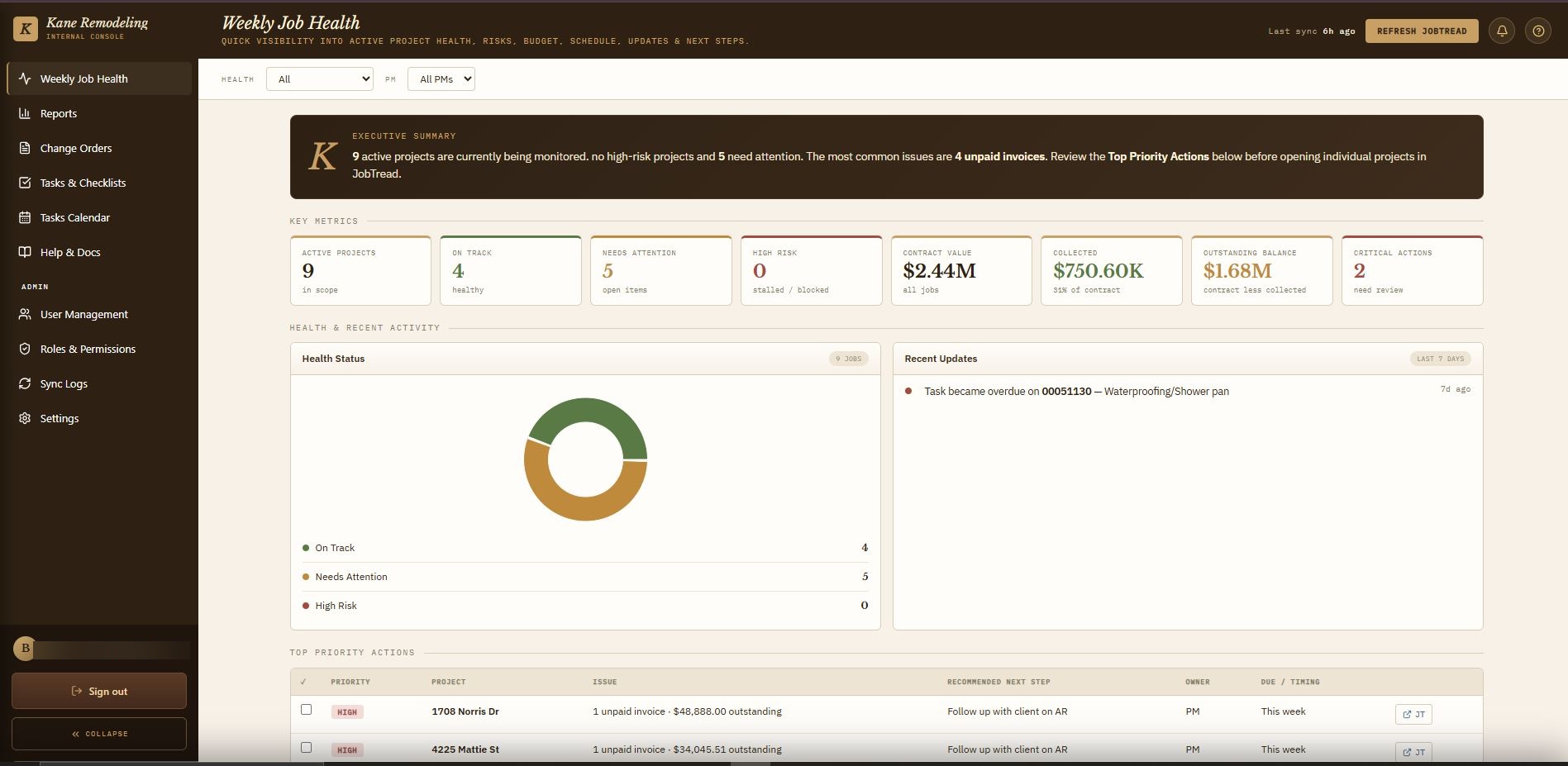
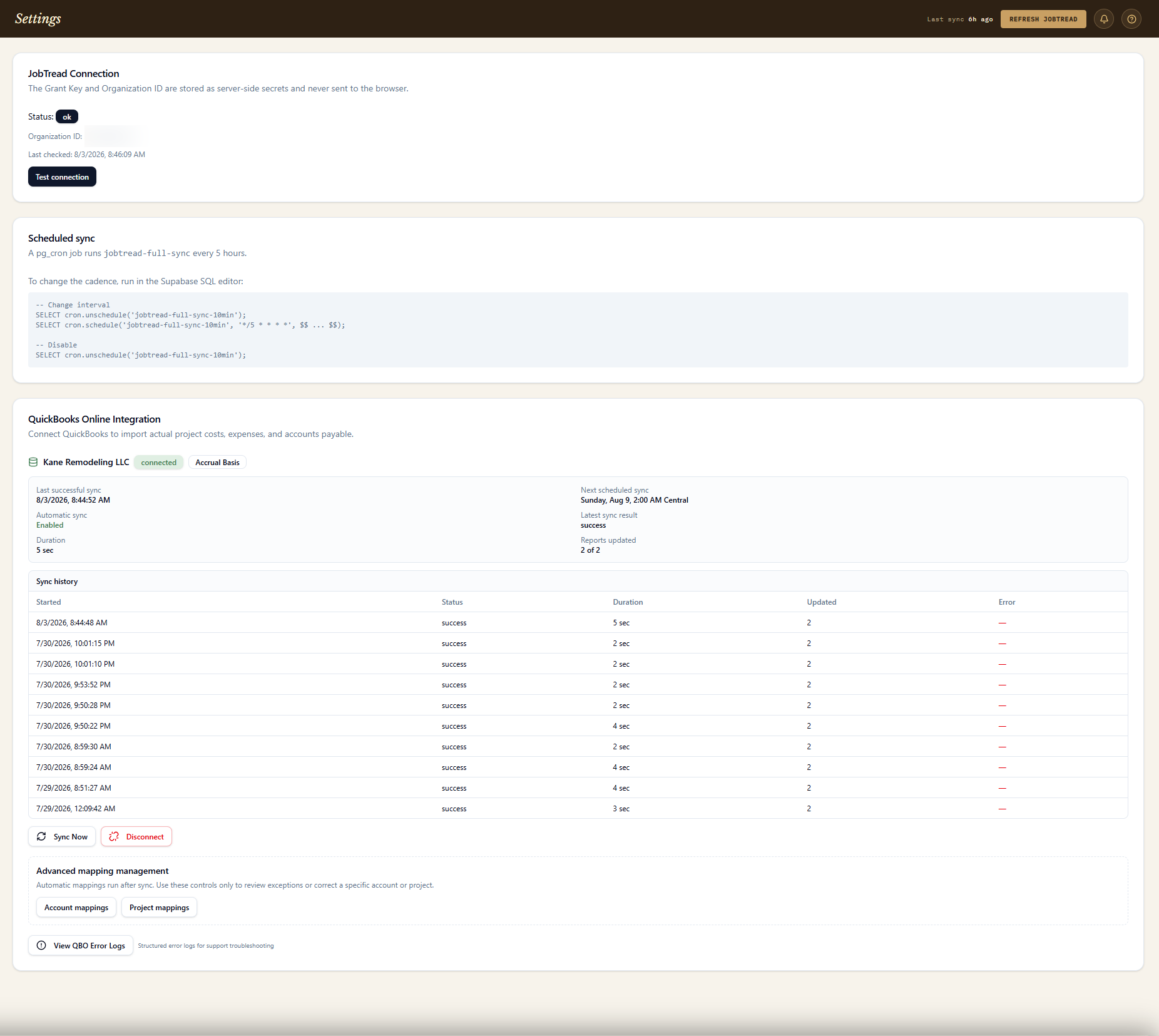
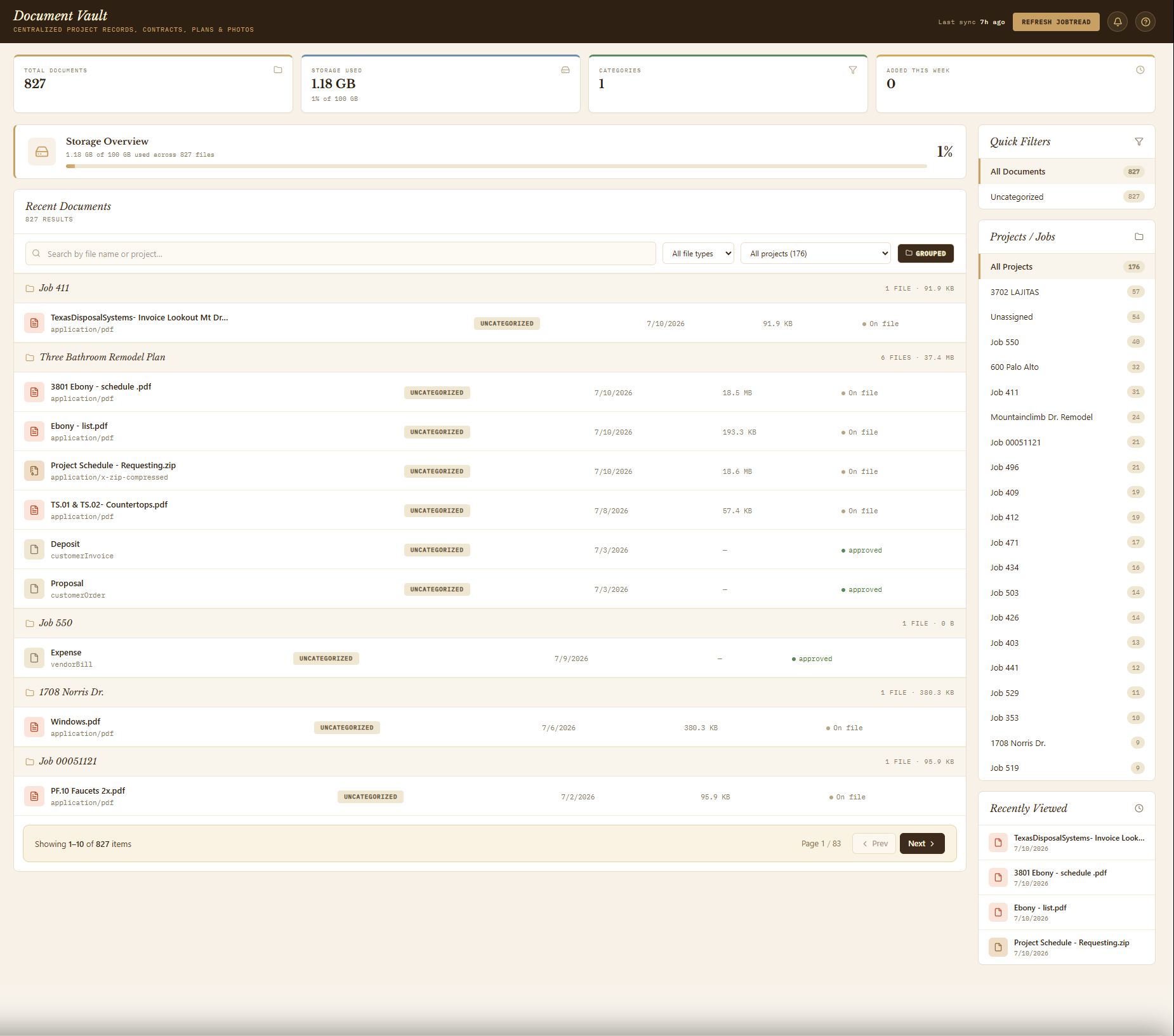
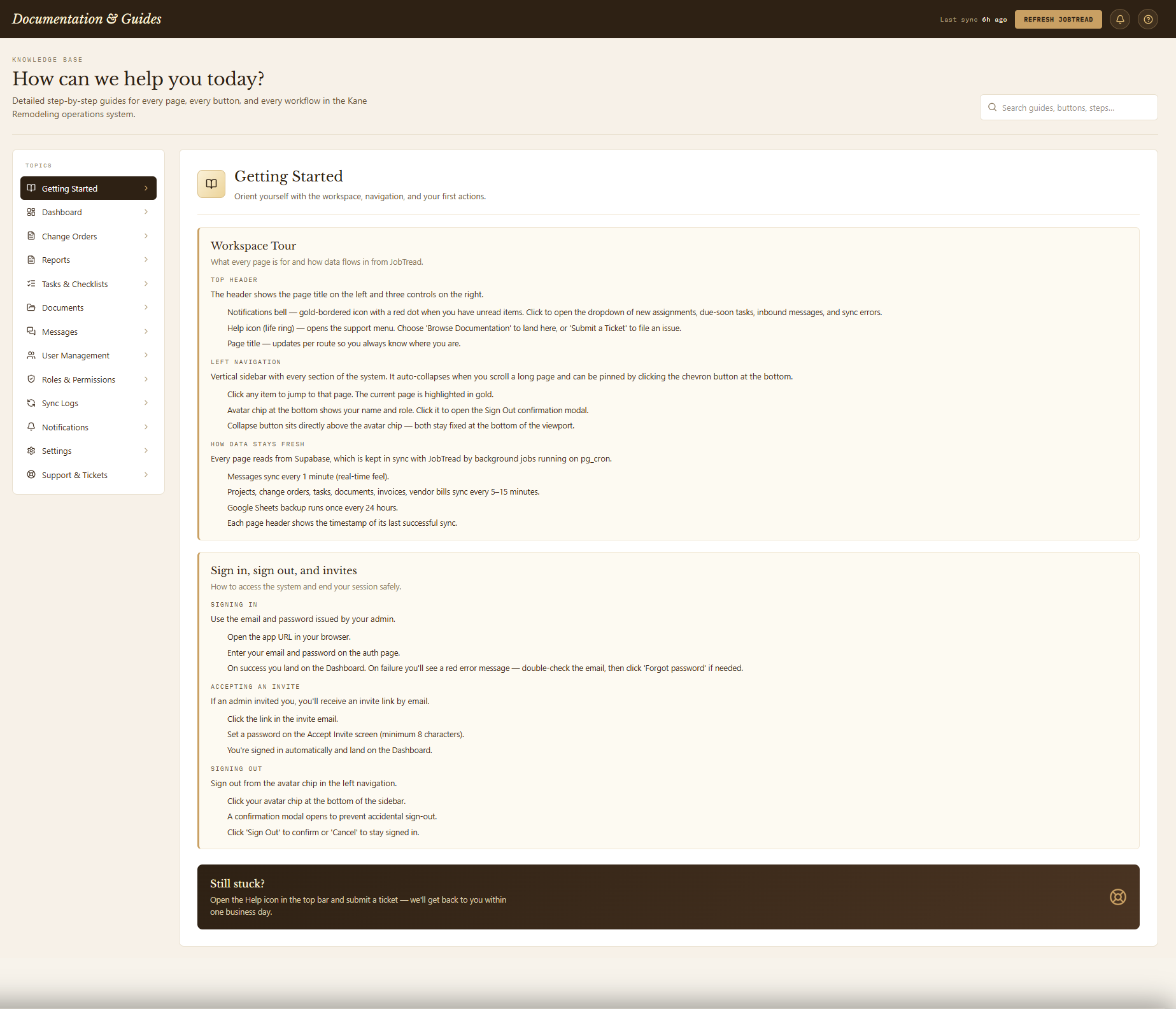
An internal construction operations console that pulls project, customer, contract, invoice, task, change-order, document, message, and vendor-bill data from Kane Remodeling's JobTread account, combines it with QuickBooks Online accounting data, and turns it into a controlled workspace for project teams, finance, and admins.
Kane Sync Hub is a full-stack internal operations platform built for Kane Remodeling. JobTread stays the operational source for projects, customers, contracts, change orders, invoices, tasks, documents, and messages. QuickBooks Online stays the accounting source for actual expenses, vendor bills, accounts payable, and financial statements. Kane Sync Hub normalizes both sources, applies construction-specific business rules, and presents the result through role-aware dashboards, reports, and workflows.
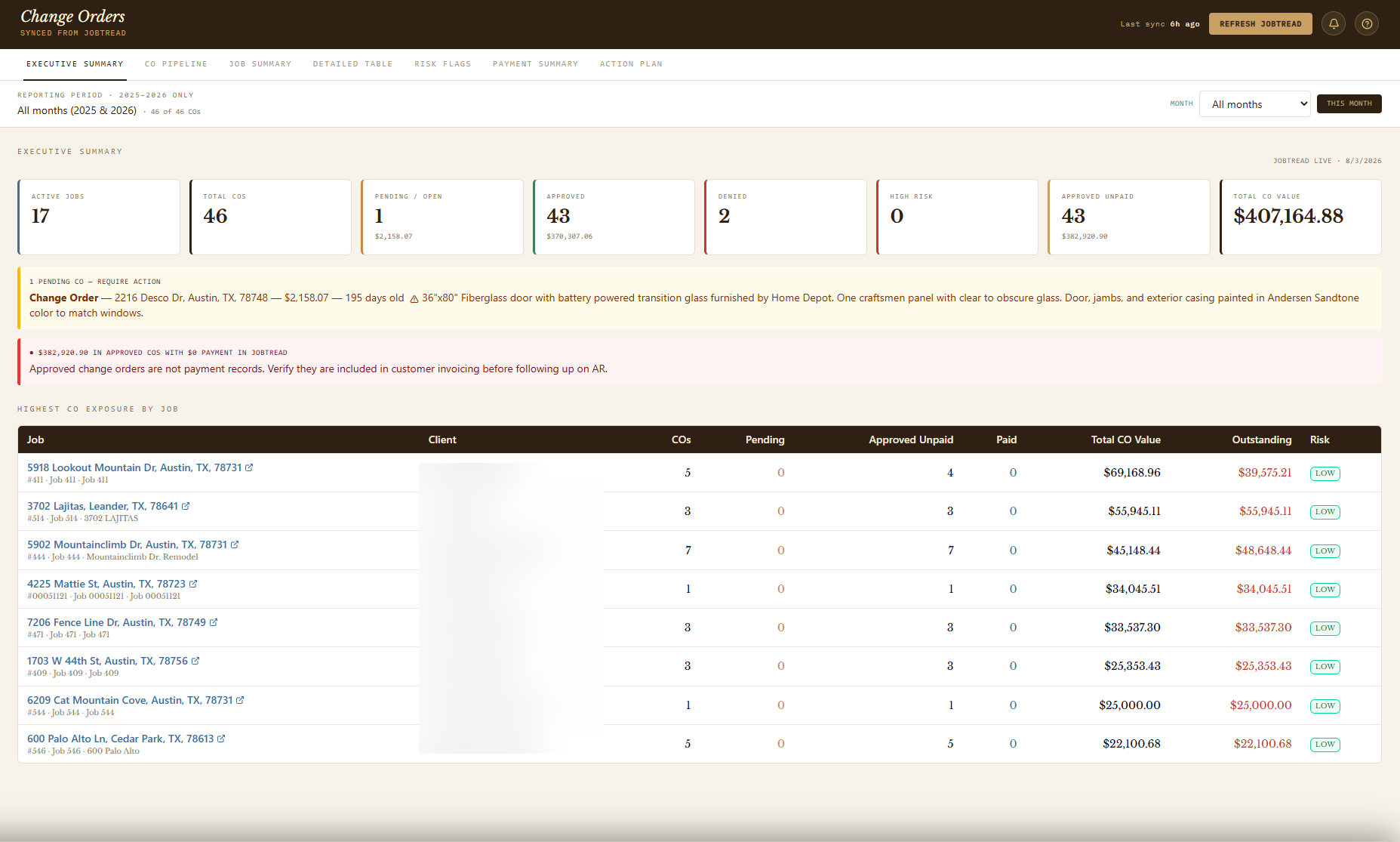
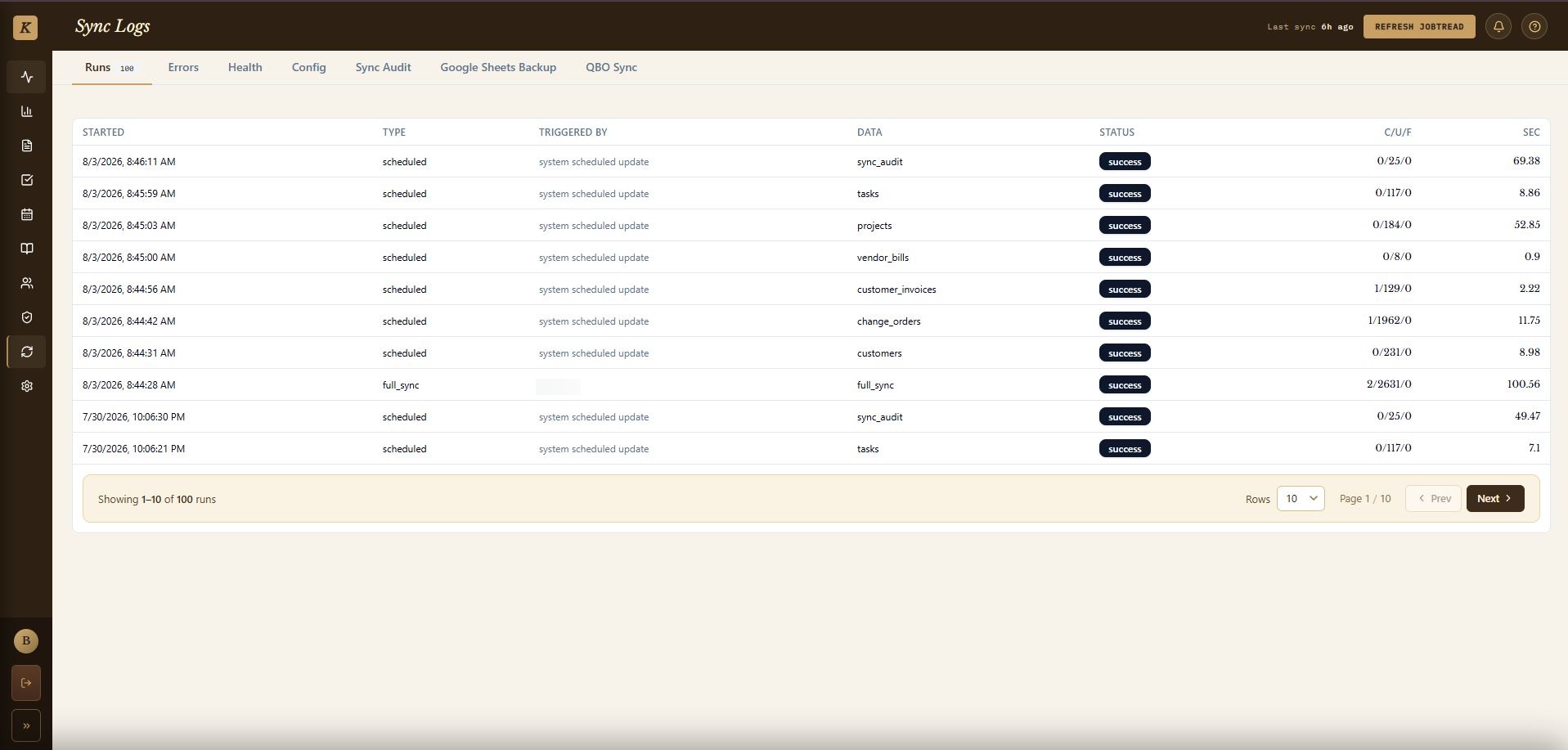
Project managers couldn't see financial and execution risk in the same place. Finance had to manually compare contracts, invoices, payments, budgets, and vendor costs against accounting reports. Approved change orders could sit unbilled or unpaid with no exception signal, and when a sync failed, nobody could tell if the data on screen was current, partial, or stale.
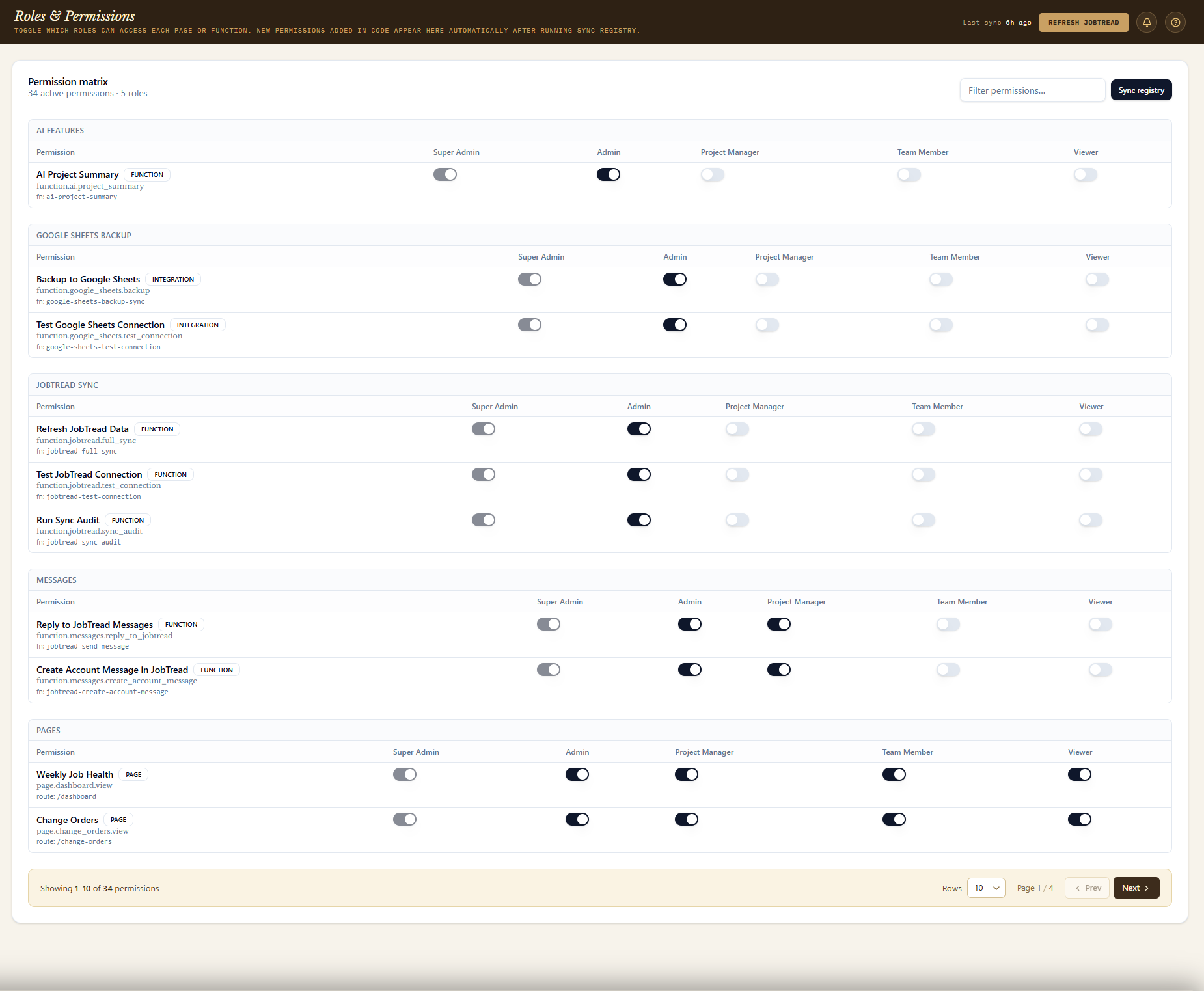
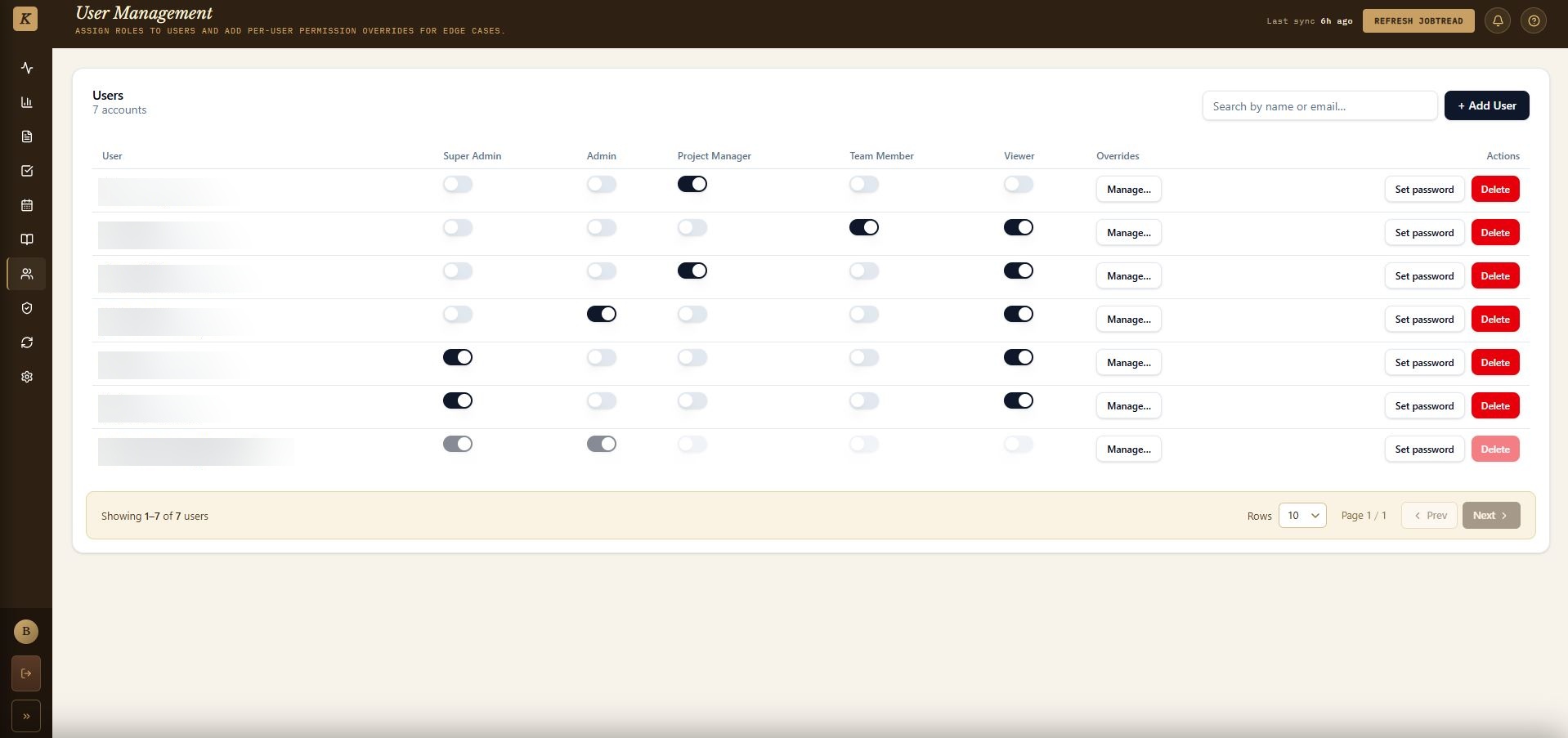
Built a controlled operational layer on top of the company's existing JobTread and QuickBooks workflows instead of replacing them — Supabase Edge Functions sync and normalize both sources by external ID, apply rule-based health scoring and risk flags, map QuickBooks accounts and projects to JobTread records, and enforce role-based access down to the page, function, and data level.
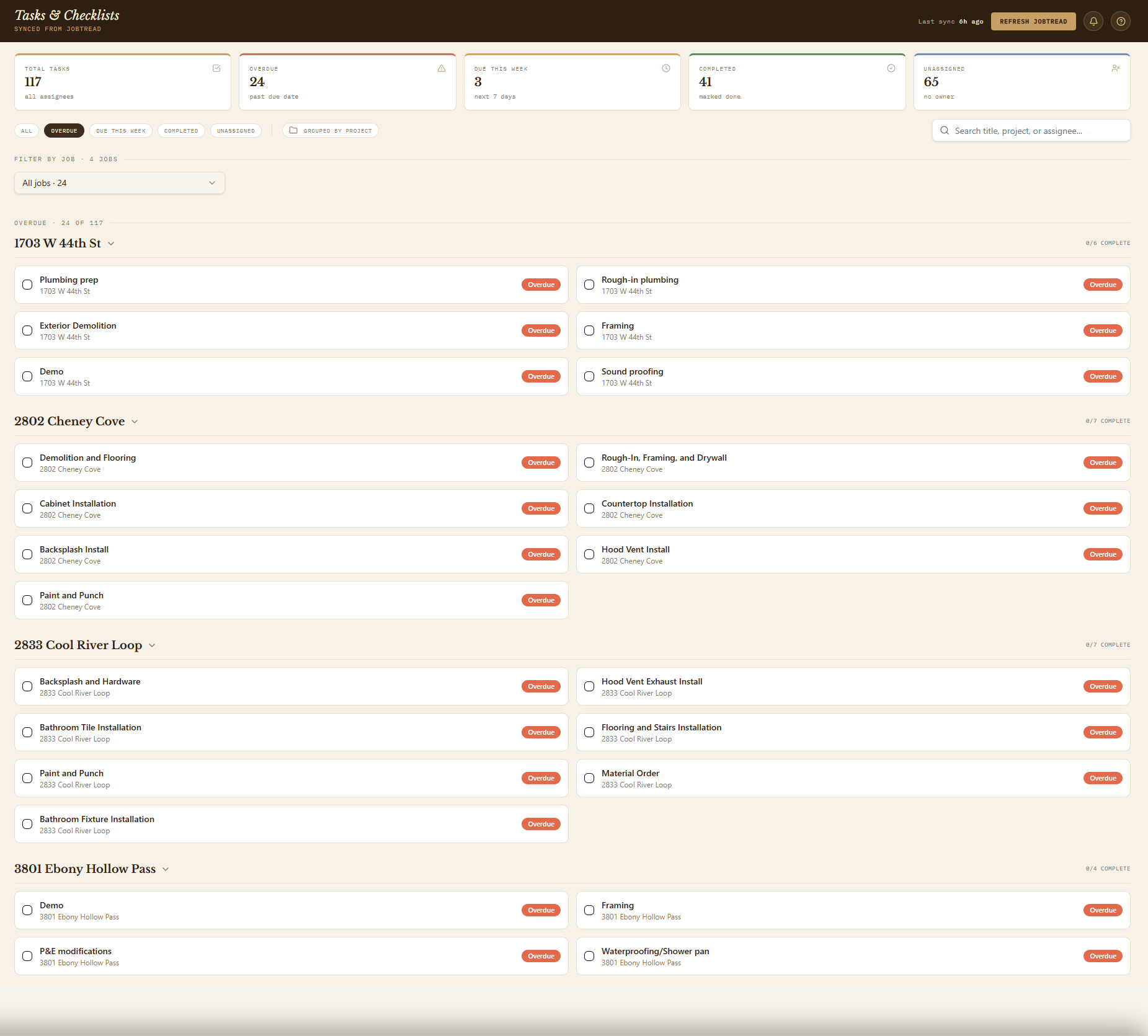
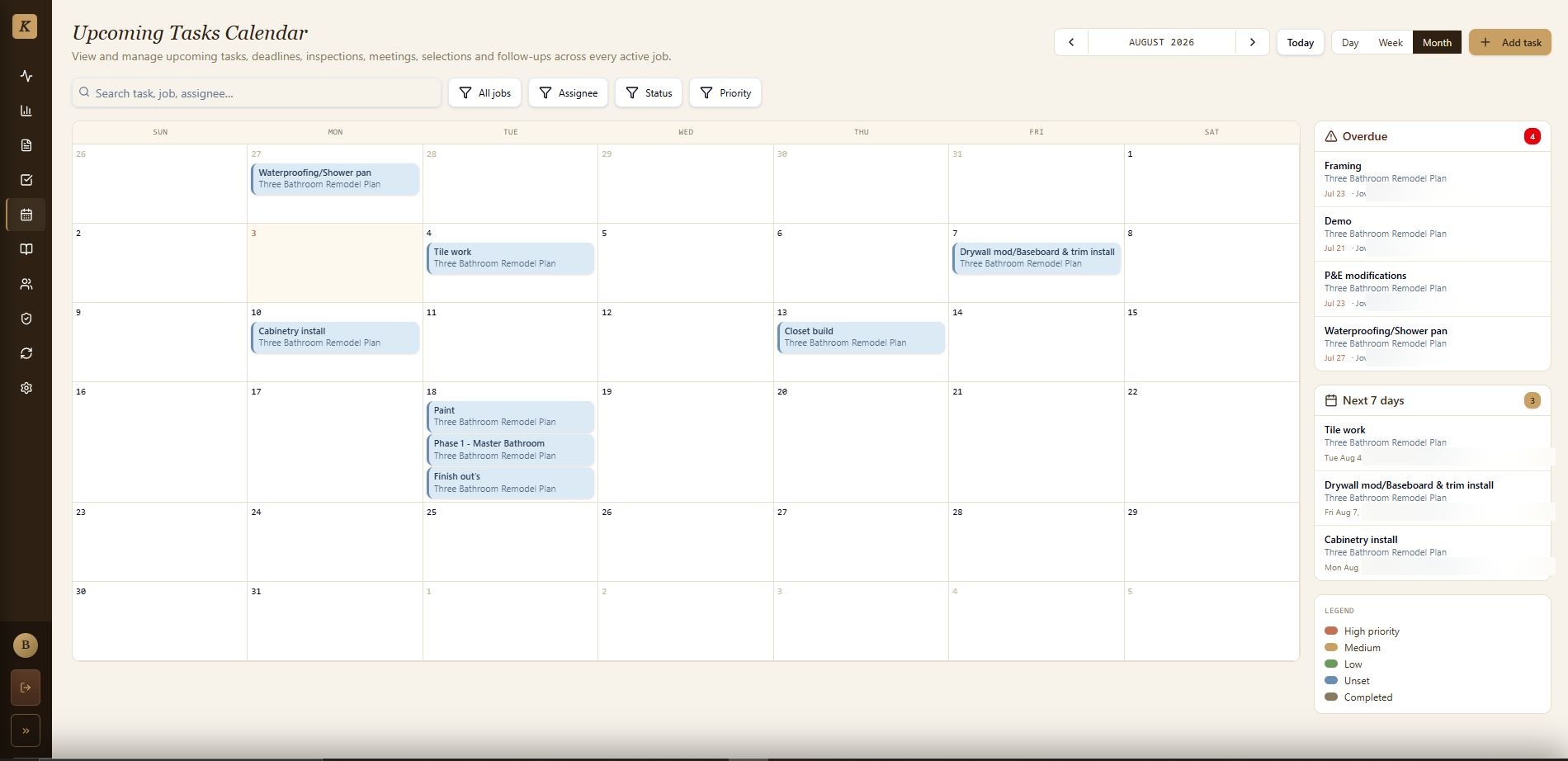
A practical command center for project health, cash collection, change-order control, scheduling, documents, communication, and accounting visibility — with every data domain reporting its own sync state so a stale report is never mistaken for a current one.
The application keeps JobTread and QuickBooks Online in place as the systems teams already trust, and layers a synchronized, role-aware workspace on top.
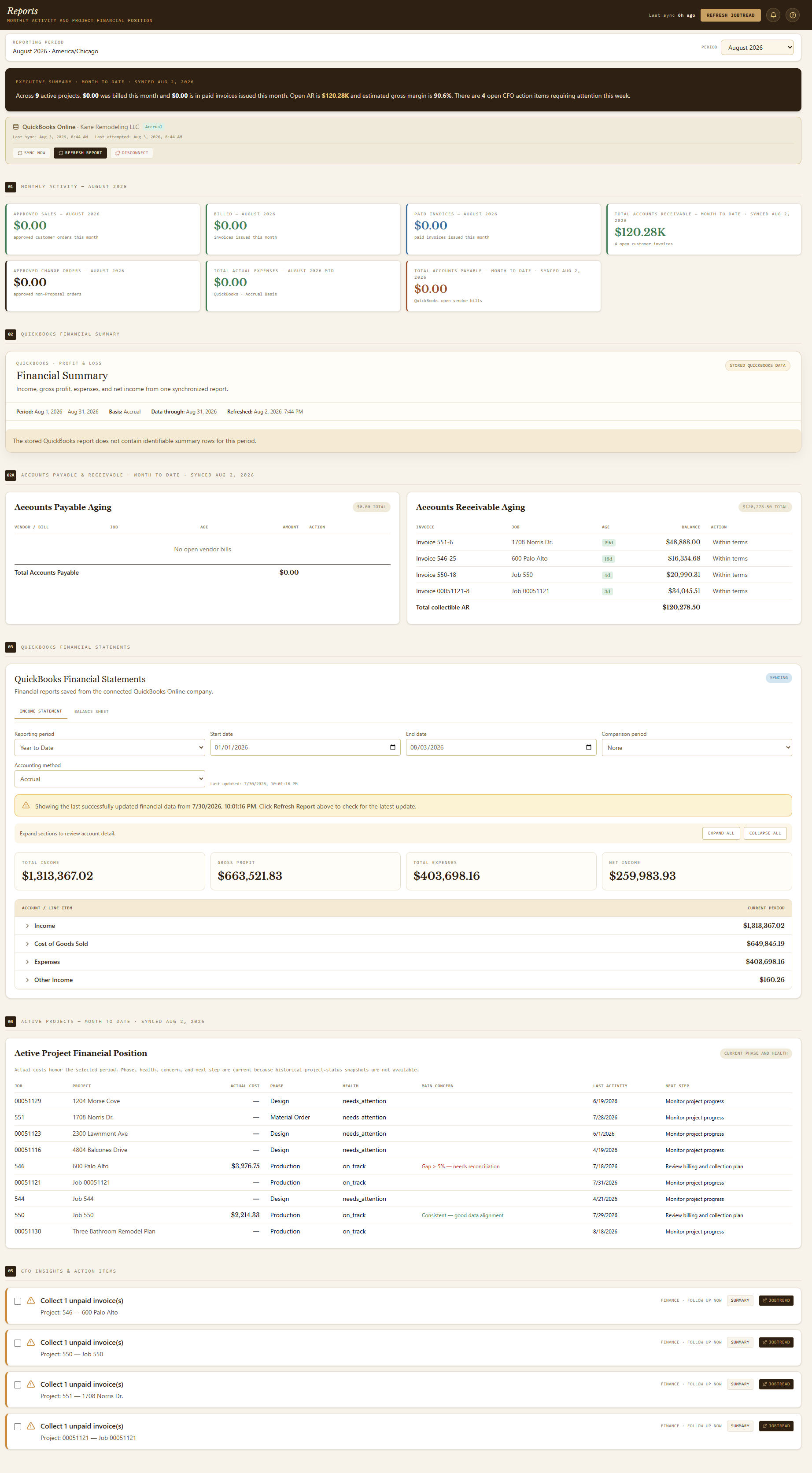
Financial reporting is built around clear source-of-truth boundaries: JobTread remains the source for sales, approved contracts, change orders, customer invoices, and project status, while QuickBooks Online supplies actual project costs, operating expenses, vendor bills, and accounts payable. The system maps QuickBooks accounts and projects to their JobTread counterparts, then calculates budget variance, actual cost, margin, and reconciliation differences on top of both. Expense normalization prevents common accounting errors — bills and purchases are counted on an accrual basis, vendor credits reduce expenses, bill payments aren't double-counted, purchase orders are excluded from actual expenses, and transfers or owner-equity activity are excluded entirely. Every sync run is recorded with its own success, partial, or failed state, and a failed refresh keeps the last verified snapshot instead of replacing it with empty values.
Click any card to expand the full detail.
I designed and developed the full-stack platform — the frontend application, Supabase data architecture, JobTread synchronization workflows, QuickBooks Online integration, financial reporting logic, role-based permissions, responsive UI, error handling, and automated testing.


Leave a public comment — questions, feedback, or your own experience with a similar system.
I'll build a synced operations layer that gives your team one accurate view of every project.
Work With Me →
Loading comments…